Magnesium and Adaptogenic Herbs often appear in the same wellness conversation, but they are not the same type of support. Magnesium is an essential mineral your body needs every day for muscle function, nerve signaling, energy production, and many other basic processes. Adaptogenic herbs are botanical ingredients such as ashwagandha, rhodiola, astragalus, and Panax ginseng that people use for stress-related wellness goals. This article explains the difference in clear language, shows where these categories overlap, and helps you decide how each may fit into daily wellness use.
What is the main difference between magnesium and adaptogenic herbs?
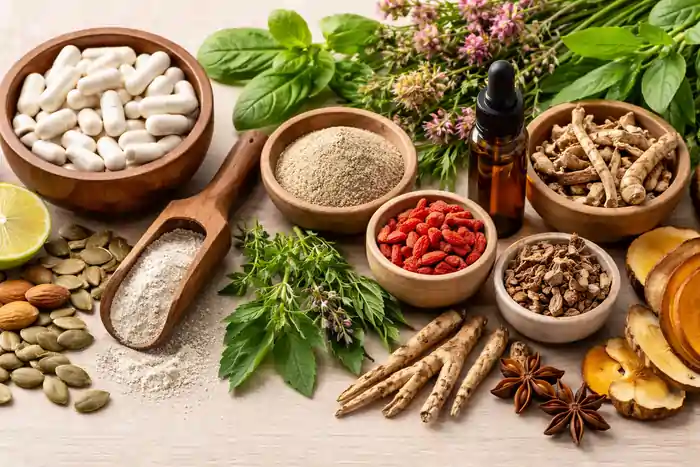
The main difference is simple. Magnesium is a required nutrient. Adaptogenic herbs are optional botanicals.
Magnesium is a core nutrient
Your body cannot function normally without enough magnesium. It helps support muscle contraction, nerve transmission, protein synthesis, energy metabolism, electrolyte balance, and bone structure. It is part of daily nutrition, not just a supplement trend.
Adaptogenic herbs are plant-based wellness products
Adaptogenic herbs are not essential nutrients. They are herbs used in traditional practices and modern supplements for goals related to stress response, stamina, or general resilience. Their role is optional and product-specific.
One covers a baseline need, the other supports a chosen goal
This is the most practical way to look at it. Magnesium helps cover a foundational physiological need. Adaptogens are usually chosen when a person wants targeted support around stress, mental performance, or recovery.
Why do people compare magnesium and adaptogenic herbs?
People compare them because both show up in discussions about stress, sleep, energy, and feeling run down. But similar marketing language does not mean the same biological role.
They can appear in the same routine
Someone may take magnesium in the evening and an adaptogenic herb in the morning. That can make them look interchangeable. They are not. They simply sit in the same wellness category for many consumers.
They share wellness vocabulary
Words like calm, balance, resilience, relaxation, focus, and stress support are used for both. That overlap creates confusion. Magnesium has a clear nutrient role. Adaptogens depend more on the specific herb, the extract, the dose, and the context of use.
They are often used by the same type of person
Busy professionals, athletes, students, shift workers, and people with inconsistent sleep often explore both categories. That is reasonable. The better question is not which one is better overall. The better question is what need you are trying to address first.
How does magnesium fit into daily wellness use?
Magnesium fits daily wellness as a foundational nutrient. It usually makes sense in the context of diet quality, intake gaps, or a simple desire to support basic nutritional coverage.
Daily intake matters
Adults need magnesium every day. Intake targets vary by age, sex, and life stage. In common U.S. guidance, adult needs are generally in the low 300s to low 400s milligrams per day. This is why magnesium is not a niche add-on. It is part of normal nutrition planning.
Food remains the first place to look
Magnesium-rich foods include pumpkin seeds, almonds, cashews, spinach, beans, soy foods, whole grains, and some fortified products. A routine built on these foods can support magnesium intake more naturally than relying on a capsule alone.
Supplement form changes the experience
Magnesium citrate, glycinate, chloride, malate, lactate, and oxide are common forms. Some forms are generally absorbed better. Some are more likely to cause loose stools. That is why product labels matter. The word magnesium alone does not tell the full story.
How do adaptogenic herbs fit into daily wellness use?
Adaptogenic herbs fit daily wellness as optional botanicals chosen for a specific reason. They are usually selected for a goal, not for nutrient replacement.
Use is usually goal-based
People often use adaptogens for stress support, mental stamina, daytime energy, or exercise recovery. A person choosing rhodiola may want support during mentally demanding days. A person choosing ashwagandha may be looking for a calmer evening routine. The logic is usually goal first, herb second.
The category is broad
Not all adaptogens do the same thing. Ashwagandha, rhodiola, eleuthero, Panax ginseng, holy basil, and astragalus have different traditional uses, different active compounds, and different evidence profiles. It is a mistake to talk about all adaptogens as if they act the same way.
Extract quality matters more than marketing claims
With botanical products, source material, extraction method, standardization, and serving size can strongly affect the product. Two adaptogen supplements with the same front label may not be equivalent in practice.
Which is more foundational for a beginner?
For most beginners, magnesium is more foundational because it is a required nutrient. Adaptogenic herbs usually make more sense after you understand your main wellness goal and review product-specific safety points.
| Category | Magnesium | Adaptogenic Herbs |
|---|---|---|
| What it is | Essential mineral | Optional botanical category |
| Why people use it | Support nutrient intake and normal body function | Support stress-related wellness goals |
| Daily need | Yes | No established daily requirement |
| Food sources | Yes, many common foods | Usually used as teas, powders, capsules, or extracts |
| Product variability | Mostly about form and dose | Very high, depends on herb and extract |
| Main beginner question | Am I covering basic intake? | What specific goal am I targeting? |
Can magnesium and adaptogenic herbs be used together?
They can appear in the same routine, but that does not mean they should be combined automatically. Whether they fit together depends on the person, the herb, the dose, the product formula, and any medical considerations.
They do not compete directly
Magnesium and adaptogens are not direct substitutes. One is a mineral. The other is a plant category. In many routines, the real question is not conflict. It is whether the combination is necessary, sensible, and well tolerated.
Combination products need extra caution
Some products blend magnesium with adaptogens, amino acids, melatonin, or B vitamins. These can look convenient, but they make it harder to tell which ingredient is doing what. They can also make dosing less flexible.
Medication and health context still matter
Magnesium can interact with some medicines by affecting absorption timing. Certain adaptogenic herbs may also have interactions or may not suit pregnancy, breastfeeding, thyroid concerns, autoimmune conditions, or stimulant-sensitive users. Labels do not replace individualized guidance.
What does daily use usually look like in real life?
In real life, magnesium tends to be used more consistently. Adaptogenic herbs are more often used based on the situation, season, stress load, or chosen routine.
Magnesium is often part of a steady baseline
A person may use magnesium daily because their meals are inconsistent, their intake may be low, or they prefer routine nutritional coverage. The mindset is usually maintenance.
Adaptogens are often cyclical or selective
A person may use rhodiola during a demanding work period, or ashwagandha during a stressful month. Others prefer not to use adaptogens continuously. This varies by herb, product design, and personal preference.
Daily use is not always necessary
Not every supplement belongs in a permanent stack. That is especially true for botanicals. A good routine is often smaller than people expect.
What are the most common forms and examples?
Looking at common examples makes the difference easier to understand.
| Type | Common Examples | What Usually Matters Most |
|---|---|---|
| Magnesium | Glycinate, citrate, chloride, malate, oxide | Elemental dose, tolerance, absorption, timing |
| Adaptogenic herbs | Ashwagandha, rhodiola, Panax ginseng, eleuthero, astragalus, holy basil | Herb identity, extract type, standardization, intended use |
How should a beginner choose between magnesium and adaptogenic herbs?
A beginner should start by identifying the primary need. That prevents random supplement shopping.
Choose magnesium first when nutrition is the main issue
If your meals are inconsistent, you rarely eat nuts, seeds, legumes, or leafy greens, or you want to review foundational intake before exploring extras, magnesium is the more basic place to start.
Consider an adaptogen only when the goal is specific
If your interest is clearly about daily stress load, mental stamina, or a defined routine goal, then an adaptogenic herb may be worth exploring. The choice should depend on the specific herb, not just the word adaptogen.
Do not use broad symptoms as a shortcut
Fatigue, poor sleep, low mood, muscle cramps, or feeling overwhelmed can have many causes. Supplements are not a substitute for medical evaluation when symptoms are persistent, new, or worsening.
Checklist: how to make a sensible daily wellness choice
- Define the main goal in one sentence.
- Check whether the goal is nutritional or botanical.
- Review your diet before buying a supplement.
- Read the Supplement Facts or ingredient panel closely.
- Avoid products with unclear proprietary blends.
- Check serving size, not just front-label claims.
- Look for third-party testing when available.
- Review medication timing and possible interactions.
- Start with one change at a time.
- Reassess whether the product still fits your routine.
Are there any useful statistics to know?
Yes. They help show why magnesium and adaptogenic herbs should not be treated as equal categories.
Magnesium is a recognized shortfall nutrient in many diets. That makes it relevant at the population level, not just the supplement level.
Adult magnesium guidance typically falls around 310 to 420 milligrams per day. The exact target depends on age, sex, and life stage.
Supplemental magnesium has a tolerable upper intake level from supplements and medications. More is not always better, especially if the product causes digestive side effects.
Adaptogen evidence is herb-specific. Safety, duration of use, and quality of evidence vary widely across ashwagandha, rhodiola, ginseng, and other botanicals.
What safety points matter most?
Safety matters for both categories, but the safety questions are different.
Magnesium safety points
High supplemental intakes can cause diarrhea, nausea, or abdominal discomfort. Magnesium can also interfere with the absorption of some medications if taken too close together. People with kidney disease need extra caution because magnesium handling may be impaired.
Adaptogen safety points
Adaptogenic herbs vary widely in safety profile. Some may not be appropriate during pregnancy or breastfeeding. Some may interact with medicines. Some may affect sleep, blood pressure, thyroid-related considerations, or stimulation tolerance depending on the herb. This is why the specific plant matters more than the category name.
Persistent symptoms should not be self-managed indefinitely
If you have ongoing fatigue, sleep disruption, palpitations, muscle weakness, mood changes, or other recurring symptoms, it is better to review the issue with a qualified clinician instead of building a larger supplement stack around guesswork.
FAQ
Is magnesium an adaptogen?
No. Magnesium is an essential mineral, not an herb.
Are adaptogenic herbs required for daily health?
No. They are optional botanicals, not required nutrients.
Which is better for a beginner, magnesium or adaptogens?
Magnesium is usually more foundational because it supports basic nutrition.
Can I take magnesium and ashwagandha together?
Some people do, but the right choice depends on the product, dose, and your health context.
Do all adaptogenic herbs work the same way?
No. Each herb has its own traditional use, active compounds, and safety profile.
Is food a better source of magnesium than supplements?
Food is often the best starting point because it improves overall diet quality as well.
Should I use adaptogens every day?
Not always. Daily use depends on the herb, the product, and the reason for using it.
Glossary
Magnesium
An essential mineral involved in muscle, nerve, and energy functions.
Adaptogen
A term used for certain herbs commonly marketed for stress-related wellness support.
Botanical
A plant or plant-derived ingredient used in food, tea, or supplements.
Extract
A concentrated preparation made from plant material.
Standardization
A manufacturing approach that aims for a consistent level of selected compounds.
Elemental magnesium
The actual amount of magnesium provided by a supplement form.
Tolerance
How well a person handles a product without unwanted effects.
Supplement stack
A combination of several supplements used together in one routine.
Conclusion
Magnesium and Adaptogenic Herbs belong to different parts of daily wellness. Magnesium helps cover a basic nutrient need, while adaptogenic herbs are optional tools chosen for a specific purpose. Start with the need, not the trend.
Sources
NIH Office of Dietary Supplements, Magnesium Fact Sheet for Health Professionals — ods.od.nih.gov/factsheets/Magnesium-HealthProfessional
NIH Office of Dietary Supplements, Magnesium Fact Sheet for Consumers — ods.od.nih.gov/factsheets/Magnesium-Consumer
NIH Office of Dietary Supplements, Magnesium consumer PDF with supplement form notes — ods.od.nih.gov/pdf/factsheets/magnesium-consumer.pdf
National Center for Complementary and Integrative Health, Rhodiola overview and safety — nccih.nih.gov/health/rhodiola
European Medicines Agency, Rhodiola rosea herbal monograph — ema.europa.eu/en/documents/herbal-monograph/final-european-union-herbal-monograph-rhodiola-rosea-l-rhizoma-et-radix-revision-1_en.pdf
European Medicines Agency, Rhodiola rosea herbal medicinal product overview — ema.europa.eu/en/medicines/herbal/rhodiolae-roseae-rhizoma-et-radix